Tuesday, 14 June 2011

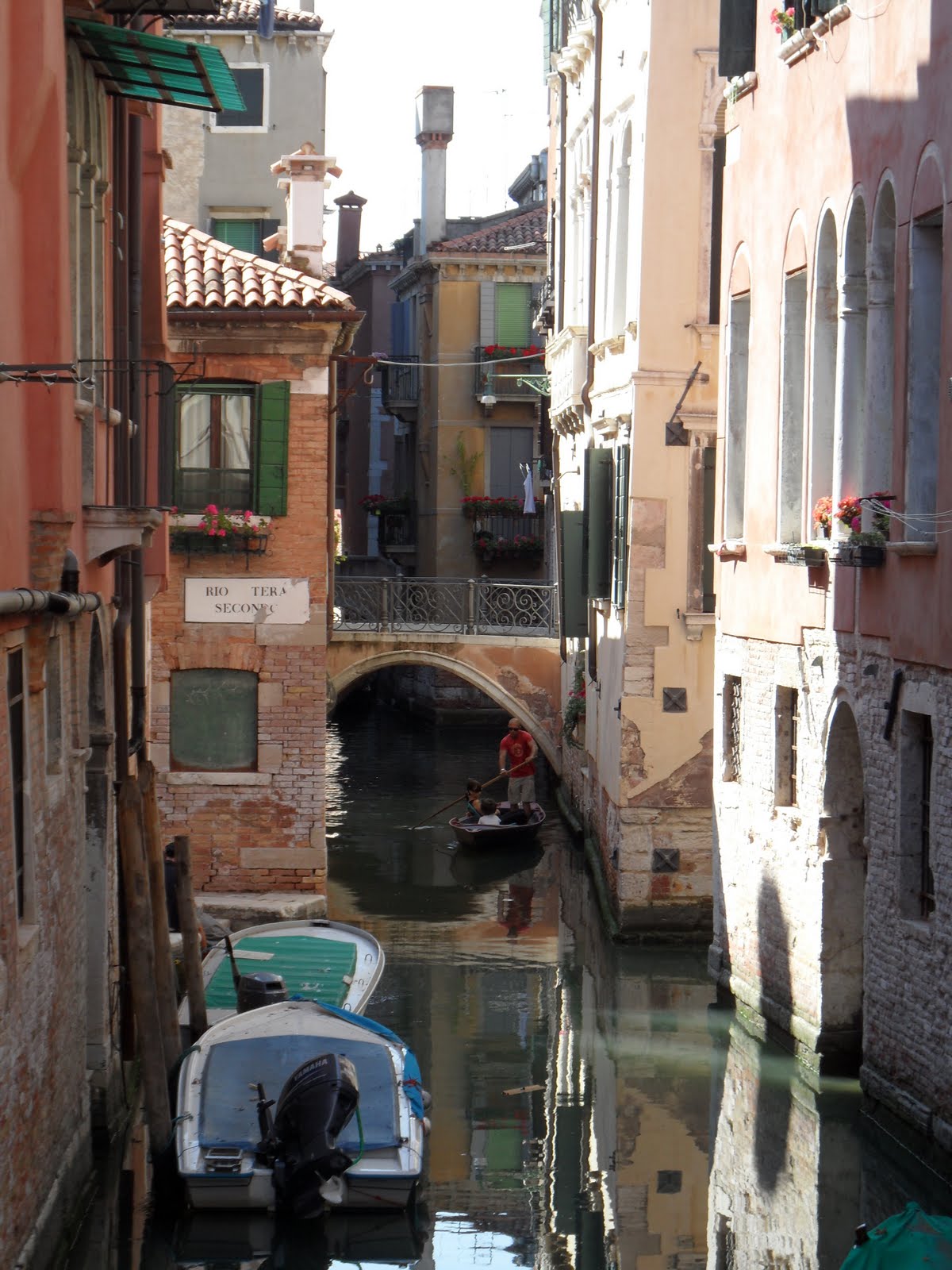
Venice in 6 Shots

117 islands, 177 canals, 409 bridges, 0 cars, 60,000 inhabitants, up to 25 million visitors a year and 1 big problem: the entire place is slowly sinking. An impression of Venice in 6 shots.


Saturday, 11 June 2011

Funeral

What do you do when you suddenly find yourself in a tight spot? When the walls start crumbling, friends turn out to be foes and any minute may be your last? Some curl up in a ball and hope the storm will pass. Others prefer to face their opponent and go down fighting. Still others can't decide on a single strategy, lose control of the situation and eventually trip over their own feet.

Lately, Italian prime minister Silvio Berlusconi seems to fall into the latter category. In a surprising turn of events his party, the right-wing Popolo della Libertà, suffered a crushing defeat in last month's local elections. Things were looking bleak after the first round of voting on 15 and 16 May, but looking at the results of the recent runoffs even the most ardent of his supporters must admit that Berlusconi's political life is in danger. Overnight, a string of towns and cities across Italy changed colour. Painful, of course, but what really hurts is the loss of Milan, Berlusconi's hometown. After two decades of centre-right dominance, incumbent mayor and Berlusconi protégée Letizia Moratti suffered a 55-45 percent defeat against local left-wing lawyer Giuliano Pisapia.

Berlusconi, conveniently out of the country when the votes had been counted, responded by saying that he was 'too busy to go to his own funeral'. Cracking joke, in my opinion, but 'one in which defeat is tacitly admitted,' as one commenter pointed out. Perhaps he realised this himself, for then he went on to say that the main thing is to remain calm and move forwards. 'Every time I suffer a setback, I triple my forces.'

In Berlusconi's world that might well entail a further expansion of his broadcasting empire—the source not only of his personal fortune but also of his political success. Without batting an eyelid, Berlusconi blamed the press for the major blow his party had suffered, ignoring the fact that it's the prime minister himself who owns the bulk of the national TV channels. There had been what he called a campaign of press disinformation against the government. 'Many moderate electors, disgusted by the spectacle of this kind of policy, decided not to vote,' he said. 'There is real disinformation and it's always against us.'

The final KO might follow this Sunday and Monday, with the much-anticipated referendum on nuclear power, water privatisation and the question whether ministers can plead that official duties constitute a legal impediment to their appearing in criminal trials. Given the fact that the prime minister faces various corruption trials and still has to deal with the ever-expanding aftermath of the Ruby Rubacuori affair, the fate of Il Cavaliere (The Knight) is directly linked with the result of this referendum. The opposition is out for blood, hordes of youngsters in cities such as Milan are preparing for another celebration.

It remains to be seen what will happen, but whatever the outcome of the referendum I think the biggest gain for Italy is that the Italians suddenly seem to realise that their vote can make a difference. A surprising step for a country that has gone through the stages of frustration, anger and indifference. There is something in the air here, and I'm not sure Il Cavaliere likes the smell of it.

Wednesday, 1 June 2011

Miracle

St. Columban, guarding his own crypt
O glorioso nostro Patrono, San Colombano, luce di santità ed esempio di fortezza, che per divina provvidenza venisti a noi dall'Irlanda per essere nostro modello di perfezione e rendere con la fondazione del Monastero la nostra terra culla di santi e centro di irradiazione della grande opera di riforma cristiana, accogli le nostre confidenti preghiere ed ottienici da Dio che, a tuo esempio, santificando la nostra vita col lavoro, con la preghiera e con la penitenza, possiamo meritare la divina misericordia, progredire ogni giorno nell'amore di Dio e del prossimo ed essere un giorno partecipi con te dell'eterna felicità.
                        —Pietro Zuccarino

I found this prayer to San Colombano (St. Columban in English) in the basilica of Bobbio, a small town halfway between Genoa and Piacenza. Now, I'm hardly an expert when it comes to saints and the miracles ascribed to them, but this name rang a bell. The words 'venisti a noi dall'Irlanda' gave it away. I faintly recalled having written a paper on the notion of pilgrimage in a couple of Old English and Old Irish poems. The name of Columban had popped up a lot in the secondary literature.

St. Columban, I remembered, was one of the major chappies when it came to spreading the Word across the continent. Born in the sixth century in Meath, Ireland, Columban was so strikingly handsome that the Irish lassies went soggy at the merest sight of him. Legend has it that, after a good deal of fooling around, he got so fed up with this life of depravity that he told his latest love goodbye and vowed to dedicate the rest of his days to the works of the Lord. So off he went, taking a few masterclasses here and there, and embracing a lifestyle of modesty and abstinence. Soon, he became a teacher himself and set out to found a string of monasteries across the Frankish kingdoms, performing a number of rather curious miracles along the way, including the taming and subsequent yoking of a bear and escaping unscathed from a pack of peckish wolves.

Bobbio's Ponte Gobbo has eleven spans, all of different height
However, Columban pulled the biggest stunt towards the end of his life. Having finally settled down in Bobbio, which soon became the religious stronghold of the region, he thought the town could do with a bridge spanning the river Trebbia. Instead of hiring an engineer and a team of construction workers, he made a pact with the devil. Old Nick agreed to build the bridge in a single night provided that Columban gave him the soul of the first passerby. But when the bridge was finished, the saint, apparently more of a cat person, sent a dog.

Very nice, I thought, having crossed that oddly shaped bridge on my way to the basilica. Then I learnt that there are dozens of these devil's bridges scattered across Europe, each of them oddly shaped and each of them with a similar story. After the initial disappointment I counted my blessings. There I was, alone in a breathtaking basilica, admiring intricate frescoes and the marble sarcophagus of a saint—all of this in a charming town that must be teeming with tourists in July and August. Not much of an epiphany, perhaps, let alone a miracle. But for a brief moment I felt tempted to kneel down and say a little Italian prayer.

Monday, 23 May 2011

Borders

Sign at an abandoned border checkpoint
It may be true that the national borders separating EU countries are a thing of the past—nowadays not more than a road sign welcoming you to the next country. But when you're travelling slowly, savouring each and every kilometre, you become aware of the fact that they're still very real, tangible almost.

A few weeks ago I crossed the Spanish-French border. One moment I was buying a can of Coke at a Spanish petrol station, withing spitting distance of France, having a nice chat with the cashier. A mere ten minutes later I found myself in what seemed to be a different world, my command of Spanish suddenly rendered useless, forced to find new ways of relating to my surroundings.

Naturally, the same thing happened when I entered Italy the other day. But now the experience, if you can call it that, took on an extra dimension. For days I had been cycling a narrow coastal strip that might well be the most affluent region I will visit on this trip: the Côte d'Azur. In Nice I cycled an endless boulevard lined with picture-perfect fin-de-siècle luxury hotels. In Cannes I witnessed the madness that is the annual film festival—people thronging the streets, a horde of cameras trailing a cluster of scrawny actresses. In Monaco I shared the road with Ferraris and Lamborghinis sporting tiny four-character license plates, working themselves into a rage in the winding streets of the principality. And then, as you emerge from a long and dark tunnel, it's all over. Just like that. You're in Ventimiglia, the first town this side of the border. The word grim doesn't even begin to describe it. And it seems as though Ventimiglia knows it's an ugly duckling, for the town tries its utmost to get you to the other side as quickly as possible. But after that the glitter and glamour never return.

Theme park France: a drive-in boulangerie
At first I felt excited. At last a new country, after having spent such a long time in France and Spain. But then anxiety started creeping in. Now, Italy isn't exactly what you would call a third-world country—leaving aside politics, for the moment—but the prospect of having to live without indispensable foodstuffs such as chaussons (a pastry with a filling of applesauce) and pâte à tartiner aux noisettes (chocolate paste in convenient plastic bottles) left me somewhat shaky. And how to continue life without villes et villages fleuris? In France, many towns and villages are rated according to the amount of effort they've put into brightening up the place with flowers and plants and what not. A sign on the main road will tell you how fleuri a ville or village is. Four flowers means top of the bill: roundabouts ablaze with all kinds of colours, dense shrubbery instead of parking lots, you name it. One flower means that the mayor can't tell a dandelion from a daffodil.

Now, this is all rather trivial, of course. But it's the trivial things that remind me of the fact that with each border crossing I'm getting farther away from the theme park that is Western Europe. That's not something to get worried about. In fact, I'm yearning for a change of scenery. But it will take a few mental border crossings before I feel wholly at ease with having entered the real world.

Friday, 13 May 2011

Brats

Muggings: 0, I put under Stats when I set up this blog. A rather sorry attempt at being funny, you probably think. And you're right, of course, but reflecting on what happened to me the other day, I think it might also be a way to ward off evil, to alleviate my biggest fear: being held up on a quiet country road, forced to hand over bike, bags and boyhood dreams of exploring the unknown.

The fact of the matter is that I've been robbed. Twice. The first time, a couple of months ago, someone stole my treasured fleece jacket. Due to sheer carelessness, I must add, but that only made the loss harder to swallow. It's the good old Calvinist reflex—blaming yourself rather than the one inflicting harm on you.

The second time, less than a week ago, things got a bit more confrontational if not downright ugly. Cycling across the camping municipal of Port-La Nouvelle, having just magically turned a bagful of mustiness into a bagful of fresh clothes at the local laverie, I spotted three boys standing around my tent. As soon as they saw me they legged it. Shouting 'hey! hey!' didn't convince them to turn back and come and say hello, so I went after them, ploughing through rows of hedges and empty camping lots.

When they got to a high fence they paused and glared at me. All three of them were panting. It struck me how young they were—the oldest fourteen, perhaps, the youngest a mere ten or eleven. I tried to make clear that I didn't intend to do them any harm, at least not for the moment. 'Il est gentil,' I heard one of them whisper. That seemed to pave the way for some kind of communication. 'What were you doing at my tent?' I ventured in my finest French, always patchy at best but now patchy to the point of falling apart, what with all the Spanish occupying the limited space in my head reserved for Romance languages. 'We were only looking, sir. Only looking.' 'Then why the hell did you just run away?' I snapped. One of them started shivering, as though he was having some kind of fit. But then I realised he was crying, or pretending to cry, unable to produce any tears.

I decided to let them go. Even though they were looking pretty shifty, I just couldn't believe these little brats were capable of petty crime. Not at this age. Moments later, back at the tent, I found out I was wrong. Awfully wrong. An unfastened guyline. Some paperwork out on the grass. And when I entered the tent it struck me like lightning: one of the bags on its side and one crucial item missing. A pack of Snickers bars. My emergency snack. The perfect antidote for limbs going a bit weak.

I jumped on my bike and went after them a second time. Again they made a runner and again I managed to stop them. 'Snickers?' they said, putting on an innocent face. After pushing them a bit, they admitted having taken a roll of cookies, some chocolate paste and two kiwis. And yes, the Snickers bars, too. They led me to a nearby skatepark and showed me the sad remains.

My suspicions darkened. What else could they have taken? Something valuable? One of the boys offered me to search his backpack. Nothing but dirty sports clothes and some crumpled-up homework. But the backpack itself looked pretty nice—a black-and-blue Puma affair—so I strapped it securely to my back, glad to have taken some kind of hostage. 'Right,' I said, and marched them back to the tent, determined to make sure nothing else was missing.

But how to ascertain every single item is still there when almost all of your stuff is unpacked? It's like trying to tell which, if any, piece of an unfinished jigsaw puzzle is missing. Moreover, I found I couldn't focus. What if I had arrived ten minutes later? With their appetite taken care of, greed might have been next on their list.

By now, the boys were begging me to let them go with their backpack. The oldest started hugging me, his body covered in a cold sweat. The backpack boy fell to his knees, trying to kiss my feet. 'We were only hungry, sir. Our parents are from Morocco, we don't get a lot to eat.'

I dearly wanted them to get out of my sight but not without a name or address, neither of which they were likely to provide. So I offered to do the only sensible thing: go with them and hand the bag to their parents. This simple suggestion had a profound impact. They turned pale, hesitated for a moment and then ran away, leaving me alone with the fancy backpack. I never saw them again.

An hour or so later, going through the boy's belongings, I came across a written homework assignment, something having to do with changing the point of view of a short text. Apart from the boy's name, I found his teacher's corrections, plus the final verdict:
Trop rapide. Tu oublies certains points. Les temps du récit ne sont pas respectés. 9/20 des efforts de construction.
I started feeling sorry for the lad. Getting lousy marks at school because you're too damn hungry to focus... Had I been too harsh on them? I'm ashamed to admit I even accepted two one-euro coins the backpack boy offered me as some kind of damages. Maybe I had taken it too far. They had looked so intimidated.

The next day I hung the backpack from a tree and took off early. A terrible sadness came over me, which didn't disappear until well after lunchtime.