Friday, 9 March 2012

Caravanserai

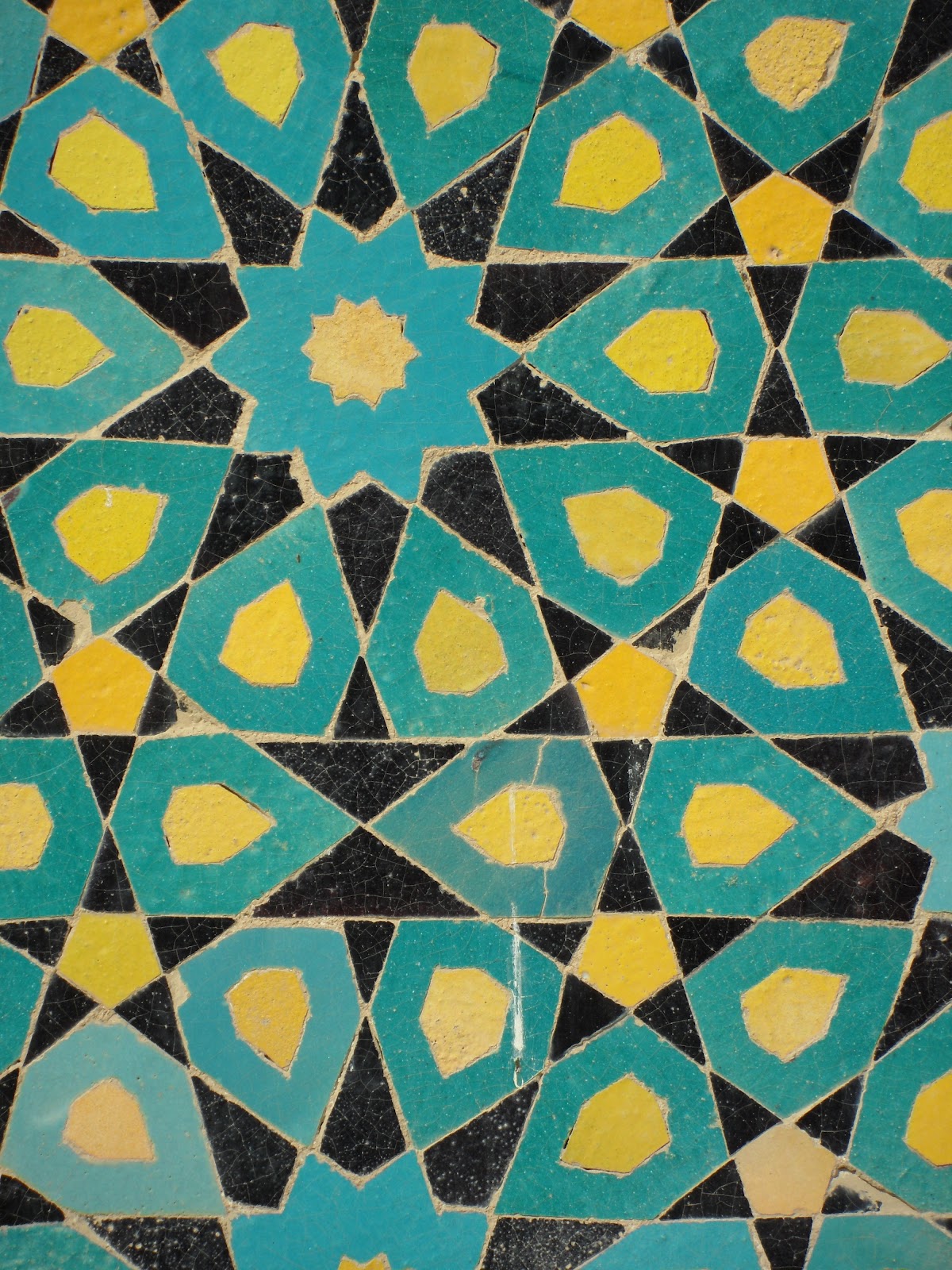
Seljuk-era caravanserai tower in Shafiabad
Once upon a time, long before the advent of asphalt and bicycles fitted with Rohloff speedhubs, travelling along the Silk Road was something only stark raving lunatics or unhappily married men would undertake. Distances were vast, climes inhospitable and the people your trading caravan ran into were more likely to loot your booty and roast your camels than to gingerly enquire about the price of your wares. Such were the dangers that most merchants preferred to stick to a relatively short stretch of the route, toing and froing between staging posts to buy and sell goods. But even then trips could easily take several weeks if not months.

Over the centuries countless caravanserais were built to facilitate trade. These walled and guarded inns typically consisted of a number of vaulted rooms arranged around a square courtyard. In Anatolia, the eleventh-century Seljuks took things to a new level by ensuring that a caravan never need spend a night out in the open. A huge engineering feat, seeing that on a good day a fully loaded caravan would cover a mere twenty-five kilometres. Five hundred years later, the Safavid ruler Shah Abbas I laid the foundations for his reputation as the greatest builder of all by ordering a network of 999 caravanserais to be constructed across the Persian Empire.

Today, most caravanserais have disappeared under the sands of time. That doesn't mean the concept has vanished altogether. On the long desert road from Esfahan to Yazd lodgings are sparse though perfectly positioned. No caravanserai every twenty-five kilometres but a few lovely guesthouses, each a day's ride apart. First up was Mohammad's homestay in Toudeshk (see previous post). For the following night, he told me, there would be two options. 'After eighty kilometres you will see the remains of a caravanserai. There's an old man who cooks up simple egg dishes for truck drivers. His clothes are always dirty. He will let you stay for the night, but be careful: at night he will lie down next to you and do dirty things. But don't worry. Just show him your phone and say: police.' Although I can't deny the bit about the egg dishes sounded appealing, I decided to settle for option two: the village of Aqda, some forty kilometres down the road from the crumbling caravanserai, where a couple of paramedics were known to host the odd cyclist.

Recently restored caravanserai in Aqda
I got there just before sunset. I parked my bike next to an ambulance and knocked. A barefoot paramedic opened the door, a look of surprise on his face. He let me in, but instead of being shown where to roll out my sleeping bag I was told to wait. A few minutes later a lanky young man showed up. In broken English he told me about a hotel he was running. As he was still in the midst of converting it from a badly dilapidated mansion to a proper guesthouse, he slashed the room rate at the drop of a hat. The place was nothing short of sensational. Carved niches, vaulted ceilings, a small but elegant courtyard. Pictures of the mansion before the renovation showed what a marvelous job he had done. The manager smiled at my impressed ohs and ahs before adding gloomily that things didn't look so bright. Several months had passed since the first rooms were finished and I was only guest number twenty-three. Neither hotel nor village was listed in any of the guidebooks.

The bane of Lonely Planet, I thought. Whoever is listed in The Book, as it's commonly known among travellers, can be certain of a steady income. His neighbour, who might be running a place just as fine, will struggle to survive. The power Lonely Planet wields was illustrated by the fact that earlier that week I had been asked to edit a letter to Lonely Planet for a well-known hotel in Esfahan. As it happened, one of the authors had witnessed an argument between a member of staff and one of the guests while doing a write-up on the place. Management feared that with a single click of a button their hotel would be wiped out of the next edition of Lonely Planet Iran, which is due to appear this summer. Needless to say, the tone of the letter was pleading, like a prisoner trying to get the king to see that a beheading might be a bit on the harsh side.

However, a lack of guests wasn't the only thing that was troubling the affable Aqda hotel manager. Everything that needed to be done had to be done alone, his Dutch companion unable to return to Iran. Dutch companion... Is his name Sebastiaan, by any chance, I asked. Several people had already told me his story. Trundling through Iran as a backpacker a few years ago, he liked it so much he decided to stay and run the Silk Road Hotel in Yazd, 'the most talked about travellers' stop in Iran,' according to The Book. The place got off to a flying start, whereupon he set up a number of activities in the Yazd area, including the project in little Aqda. Then his luck changed. Wanting to return to Iran after a short break in Holland, he was denied a visa. He hasn't been back since. God knows how much time, effort and money have gone to waste this way.

Guest number twenty-three is checking out
It raises a few questions about the priorities of Iran's ruling elite. On the one hand the rather ambitious aim is to attract twenty million visitors by the year 2020. The potential is certainly there. Iran is a gem of a country, inhabited by some of the kindest and most welcoming people you can imagine. On the other hand small-scale initiatives such as Sebastiaan's are nipped in the bud. A few weeks ago, the authorities even went so far as to close down the Silk Road Hotel. For renovation, the official story went. But it was rumoured that things had got a bit too liberal to the taste of some. When I arrived it was business as usual, though every other night the hotel's courtyard restaurant would be visited by a smartly dressed gentleman eager to chat with foreign guests. After some innocuous questions he would invariably ask whether we had seen or done any 'crazy things' in Iran.

My contribution to tourism in central Iran amounted to putting the Aqda hotel manager in touch with Mohammad in Toudeshk, whose network is impressive by any standard. Mohammad promised me to pay him a visit and recommend the place to his guests. I hope it will make a difference, though it seems Iran has a long way to go if it ever wants to restore the scores of travellers of the days of yore.

Sunday, 26 February 2012

Mohammad

Door knocker in Toudeshk
'Every day after school I would go to the main road. Rain or shine. Most days nothing happened. I would just sit there on a rock, my eyes glued to the horizon. Cars. Only cars and trucks. Whenever a bus stopped, I would go up to the driver and ask him whether he had seen any cyclists that day. Usually, the answer was no. But sometimes one of them would say: yes, I spotted one today, some forty kilometres from here. You just sit there and wait, Mohammad. All the bus drivers knew my name. But the people in the village called me Mohammad Crazy.'

'On those rare days that a cyclist entered our village, I would jump up and wave and shout Hello! and Stop! and Where are you from? That was all the English I knew. Most would say Hello or Salaam without stopping. No time, some of them said. Still, that was better than nothing and I would go home happy.'

'One day a tall boy decided to stop. He told me he was from Germany and needed a place to sleep. By then I spoke some English. English was my favourite subject at school. I told him there was no hotel in our village. In the next town, forty-five kilometres from here, he would certainly find something. The boy frowned. I'm very tired, he said. Can't I spend the night at your place? I thought it over. My heart said yes, but I was afraid my mum would say no. I decided to take him to my grandparents' house. Both of them had died some years before, and the house was empty. There was not a single piece of furniture. But the boy was happy. He put his bags in this corner, where we are sitting now, and rolled out his sleeping bag over there. That night I brought him my supper, and the next morning my breakfast. I was hungry for a day, but I didn't mind. I was hosting a cyclist!'

Nastaran, Mohammad's niece
'When I turned sixteen I went to the bank, got a loan and converted my grandparents' home into a guesthouse. It was difficult at first. You've seen how nice Toudeshk is. The mud-brick buildings, the desert... But the problem was that no one knew about this village. Gradually, things started to improve. Cyclists recommended my place to other cyclists they met, and that's how it began. I've been doing this for nine years now and in that period I've hosted over five thousand travellers, including five hundred cyclists. People like it here. They like the tranquility. And we serve them something else than kebab! They play with my brother's children, climb the mountain to watch the sunset, or just relax in the courtyard. And everyone pays according to his budget. But it's always a bit less for cyclists. Haha!'

'You know, they don't call me Mohammad Crazy anymore. They call me Mohammad Tourist. But it's not tourists I'm interested in. It's travellers. That's why you won't find a big sign when you enter the village. It would change the atmosphere. Some things are better kept small. But if you happen to meet other travellers, please tell them about this place. After all these years I'm still eager to meet them.'

Tuesday, 21 February 2012

Esfahan in 6 Shots

'Esfahan nesf-e jahan', the old saying goes. Esfahan is half the world. Strolling around the city's central square it's difficult to argue with that. I sit down for a moment to take it all in. Then I open my guidebook and read: 'This central square (originally known as Naqsh-e Jahan or Pattern of the World) was first built as a garden (1602 AD) and is the largest enclosed square in the world (Tiananmen Square is larger but it is open)'. Tiananmen Square. It seems a world away, though I know I've already covered fifteen thousand kilometres of an estimated thirty thousand to Beijing.

The largest enclosed square at the centre of a journey to the largest open square; a city that is half the world; a square in that city that is the pattern of the world... My mind starts to spin like a globe. I look up and try to focus on the clear lines of the domes and porches that surround me. Minutes pass. When I'm sure no grand insights are about to materialise, I get up, take a few snapshots and give in to a more basic urge. It's time to check out the restaurants in this half of the world.

The sixteenth-century Ali Qapu Palace

The dome of Sheikh Lotfollah Mosque

Six o'clock: time for some tea and qalyan (water pipe)

Blue mosaics everywhere

Fun on the Zayandeh River

Bazaar bizarre

Saturday, 18 February 2012

Friends!

Approved by Iranian army: holy shrine in Qom...
'Stop, mister!' Damn. I was hoping to pedal along without so much as touching the brakes. Usually, a polite nod suffices to see me through road blocks and police checks, a strategy that even worked in Azerbaijan, where policemen in Soviet-style uniforms like to pester people by turning their car inside-out, preferably at ten or twenty-kilometre intervals.

Pretending I don't speak English doesn't seem the best of ideas in a no-nonsense country like Iran, so I reach for the brakes and wait for the soldiers to get out of their four-wheel drive. Three youngish lads, laughing at something, saunter towards me.

'What are you doing?', the chubby one asks. I look down at my bike and outfit. It seems rather self-evident. 'I'm cycling', I say. 'Travelling.' Puzzled looks. How to explain something that is best illustrated by doing what they have just witnessed? Then I remember the magic word. I point at myself and shout: 'Tourist!' Ah, tourist, they nod in unison. Even though I'm too cocky to think of myself as a bloody tourist (two-wheeled explorer sounds much better, in my opinion), the soldiers seem satisfied. But just as I start nourishing the hope that they might let me off the hook, the bearded soldier with the stern face demands to see my passport. 'Control', he says, before switching to Farsi. I hand him my passport, which he pockets without even glancing at it. Next on his list is any digital equipment I may be carrying. Camera? Phone? I produce them with a cheerful smile, though any cheer I may have felt rapidly evaporates as I notice that the third chap is filming everything that is going on.

...detail of painted ceiling in Fin Garden...
Registering my surprise, the chubby soldier grins and repeatedly utters the words 'control' and 'military'. Then he points at me while his hands perform a spinning motion. I gather he wants me to hop back on my bike for some grilling at a military base. I look around. Vast plains to our left, snowy peaks to our right. We're alone in an empty landscape.

As the four-wheel drive follows me at a leisurely pace I can't help but grow a bit self-conscious. Are they laughing at my riding style? The hunched back, the granny gear I always use? The sun beats down mercilessly, and soon I have to stop to line my helmet with a buff to keep the sweat from running into my eyes. I look over my shoulder. Smiles and friendly nods.

They must have checked all my pictures and text messages by now, I think as we're on our way again. Anything incriminating? I'm racking my brains to come up with something that could be deemed offensive. No nudie pics, as far as I can remember, nor funny faces next to one of the ubiquitous portraits of the ayatollahs. Then it hits me. We're not far from Natanz. An uneventful town if ever there was one, but somewhere in the vicinity an underground uranium enrichment plant is purring away (if that's what underground uranium enrichment plants do). Perhaps they suspect me of spying... I try to discard the thought. How on earth am I supposed to take pictures of something that's underground?

...and a restored Qajar-era mansion in Kashan.
After a good twenty kilometres the car overtakes me and pulls over at a barbed-wire gate. The driver motions for me to stop. What follows strikes me as a not very funny TV sketch. The soldiers make me unpack everything, but it's not a very thorough job they are doing. What's this for, they want to know, flipping through the pages of a ruled notebook. And that? It's a water filter, sir. Then the bearded fellow indicates the stick tied to the bike frame. I use it to ward off dogs, and it's always good fun to imitate a yapping mutt whenever people wonder about its use. The effect is the same as always: a hearty laugh.

Having established I'm not a spy nor a friend of the zionists nor an avid collector of gay porn, it's time for some banter. One of the soldiers starts listing all the Dutch football players he can think of. His eyes light up every time he comes up with a name. I nod and hum, but then he concludes in a way that makes me laugh: 'Roy Makaay! Dennis Bergkamp! Robin van Persie! Europa! America! Holland! Iran! Friends! No fighting! Friends! Ruud Gullit!'

Wednesday, 1 February 2012

Jinxed

My saviours at the fastfood joint
And the puncture mystery deepens. Finding myself shouting profanities at a half-deflated tyre on a Tehran expressway settled it: I had to get to the root of the problem or I would lose my mind. A bad streak, OK, fine, I can handle that. But this particular bad streak was creeping up a bit too high on the improbability scale. In fact, things were getting so unlikely that I started suspecting there might just be a logical explanation for the mess I was in. On my first day off in Tehran I had a go at the case. While my host's mum served me scrumptious pancakes, I scrutinised the inside of the rear tyre. After a few fruitless spins, feeling my way like a surgeon who's looking for a nasty protrusion, my fingertips detected something that felt like a fixed grain of sand. A bit of tweezing revealed a microscopic piece of metal wire. Victory is mine, I thought. Case closed.

My smugness didn't go down well with the gods of cycle touring. I'd hardly left Tehran when disaster struck again. An undeniable loss of pressure in the rear tyre. I bowed my head in defeat and halted at a fastfood joint at the edge of a small town. The owner proved to be an obliging fellow who led me to a small storage room where I could peacefully fiddle with patches and tubes. After a while his brother came in to bring me a plate of deep-fried I-don't-know-whats. (He must have sensed that bike repair and food make an excellent combination.) Unable to find whatever it was that caused the puncture, I decided that the tyre was jinxed. I managed to resist the temptation to burn it, then fished around in one of my panniers for a spare. By then it was too late to hit the road again, so I gladly accepted the owner's invitation to roll out my air mattress and stay for the night.

Now, the good news is that tyre and tube seem to hold up. The bad news is that this episode turned me into a complete neurotic, checking the tyre pressure whenever I can, sighing with relief when I find that everything is all right.